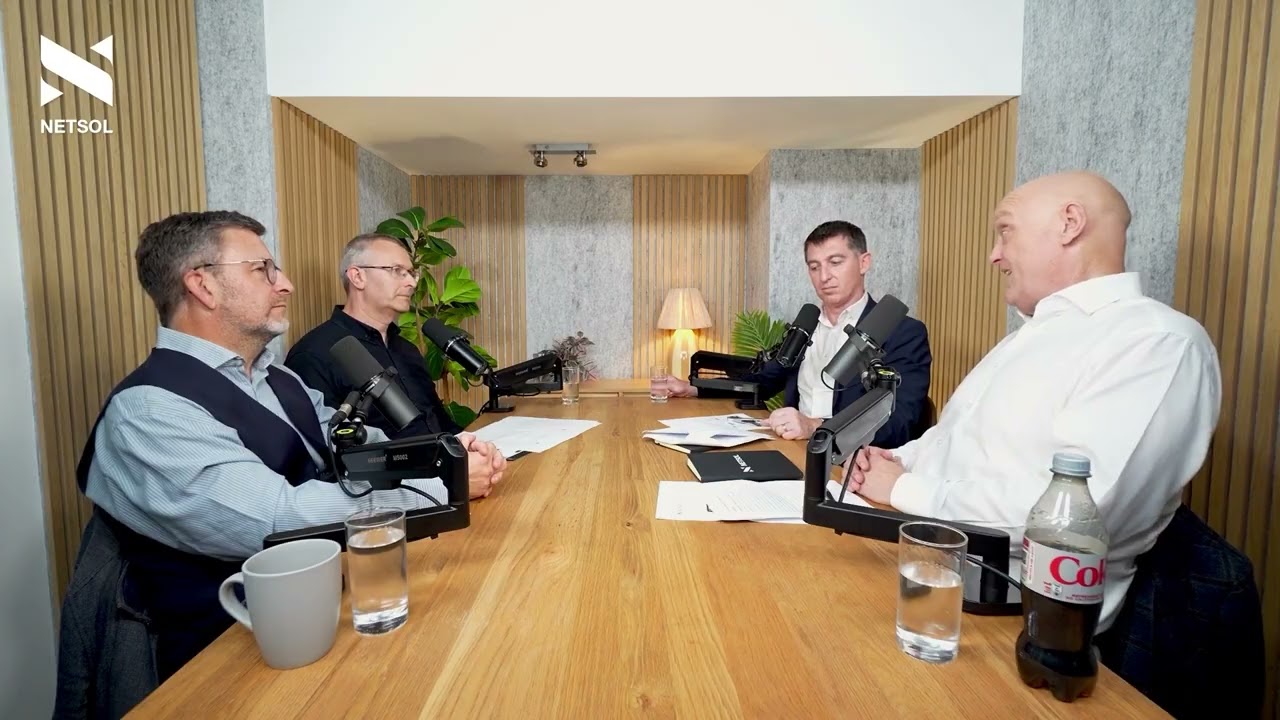
Navigating change management in long-term projects – Lessons from the field (episode 3)
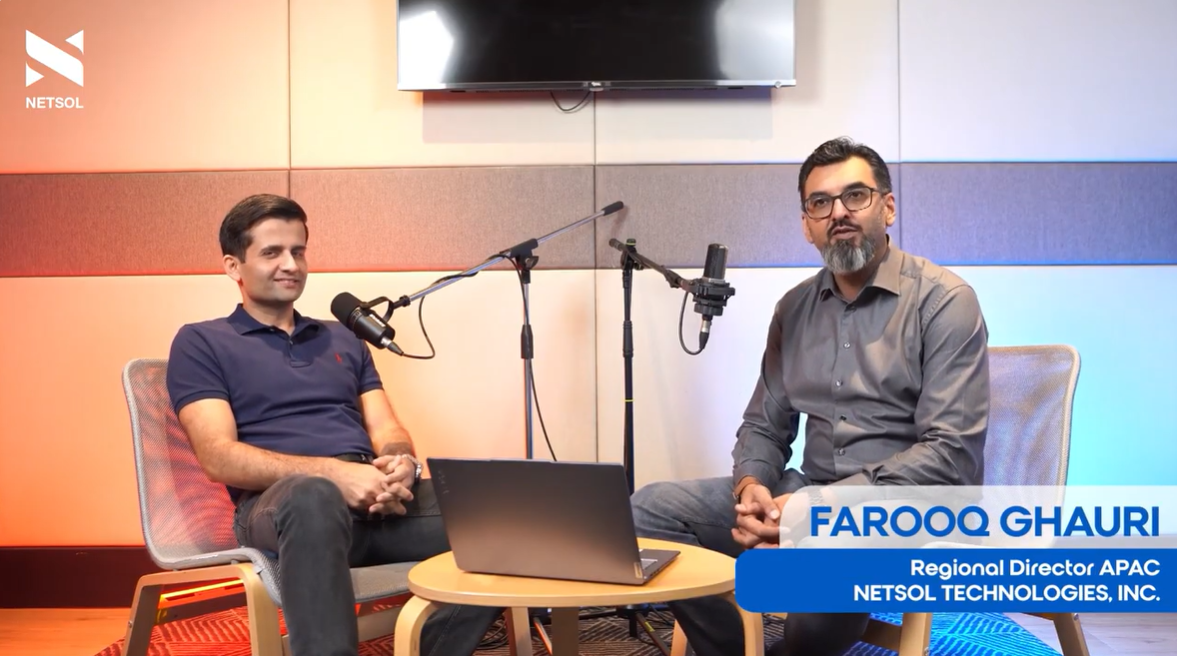
In this episode of the NETSOL Podcast, Farooq Ghauri, Regional Director APAC, draws on firsthand experience from large-scale asset finance management implementations across China, the US, and Asia-Pacific to explore what change management really demands in practice. Hosted by Hassaan Munir, Customer Success Manager for APAC, the conversation examines why change management must be treated as an organisational mindset rather than a one-time process and what that distinction means for the vendors, clients, and implementation teams who have to live with the consequences of getting it wrong.
About this episode
Long-term asset finance implementations are among the most complex technology projects an organisation will undertake. They span years, cross jurisdictions, touch every function from credit to collections, and require sustained alignment between vendors, internal teams, and executive sponsors throughout the entire delivery cycle. In this environment, the technical challenge of deploying an asset finance origination platform is often more tractable than the human challenge of bringing an organisation through the change it demands.
Farooq brings over 22 years of experience and more than 200 large-scale implementations to this conversation, a combination of vendor-side and client-side perspective that gives him a rare view of where change management efforts succeed and where they silently fail.
What you'll learn
This episode is built for programme directors, implementation leads, transformation managers, and senior technology executives at financial institutions navigating multi-year platform deployments. It covers:
- Why change management must be embedded as a company-wide culture rather than assigned as a project task and what the difference looks like in practice
- The three critical dimensions of change management: vendor alignment, internal team readiness, and executive sponsorship and how misalignment in any one of them can derail an otherwise well-executed programme.
- How human resistance to change manifests across different roles and geographies, and the practical strategies, including urgency creation, incentive structures, and agile governance, that address it.
- Why change requests that appear simple at the surface regularly introduce long-term architectural complexity, and how to protect scope without stalling momentum.
- How AI is accelerating the pace and scale of change in financial environments and what that means for organisations that have not yet built a genuine change-ready culture.
Key themes from the discussion
Three ideas ran consistently through this episode:
- Change management is a culture, not a checklist. Farooq is direct on this from the opening of the conversation: change management is not about implementing systems or running a training programme. It is about shaping an organisation, its partners, and its support structures to be genuinely flexible in the face of ongoing transformation. In asset finance, a mature industry where processes are deeply embedded and systems are long-lived, the cultural dimension of change is often harder to shift than the technical one. The companion blog on change management in long-term projects covers the full framework Farooq outlines, including his application of Kotter's eight-step model to finance and leasing implementations.
- Vendor and partner alignment is non-negotiable. One of the most consistent failure modes Farooq has observed is misalignment between lenders and their technology partners at critical moments in a programme. When vendors cannot keep pace with scope changes or cannot flex their delivery model to absorb unexpected complexity, the consequences cascade. The Maple Commercial delivery case study illustrates how NETSOL's delivery model enabled a fast-growing Australian asset finance startup to go live at speed, with the vendor and client moving in genuine alignment throughout.
- Governance must enable, not obstruct. The instinct in complex programmes is to add governance layers as risk increases. Farooq challenges this directly: too much governance creates bottlenecks that slow delivery and frustrate teams already managing change fatigue. The right architecture is structured enough to ensure alignment at the steering level and flexible enough to allow implementation teams to make decisions without escalating everything.
Going deeper: Related reading
For a sense of the scale and complexity that informs this conversation, Asset Finance International covered NETSOL's landmark deployment across China and APAC as part of a $110 million, 12-country contract, the largest in NETSOL's history.
Related podcasts
Data Migration in Asset Finance: Strategies, Pitfalls & Real-World Insights

Strategy with Jason podcast featuring NETSOL's Adam Bruttell (Digital auto retail)