
SME Finance - What needs to change to create better outcomes for SMEs, brokers & lenders
This webinar explores the future of SME finance, examining the risks of loan stacking, fragmented funding journeys, misaligned broker incentives, and the decline of tailored asset and receivables finance. It highlights how technology can improve lending decision-making, long-term suitability, and sustainable outcomes for SMEs. The discussion is particularly relevant for professionals accessing our broker portal and lender portal, offering insights into building more transparent, efficient, and responsible SME funding pathways.
About This Webinar
SME finance isn't broken — it's fragmented. The market has made genuine progress on speed and access, but lacks the coordination, sequencing, and long-term stewardship that sustainable business funding requires. This webinar, hosted by Finance Connect and featuring Jason Hurwitz, Sales Director Europe at NETSOL Technologies, examines the structural changes needed to deliver better outcomes — not just faster transactions.
Across the session, industry experts tackle the hard questions: why loan stacking has become endemic in SME lending, how misaligned broker incentives are shaping product selection, and what role technology — including AI — can play in routing businesses toward the right funding at the right time. NETSOL's asset finance software solutions are built for exactly this kind of complexity — supporting lenders who want to move beyond transactional models toward relationship-led, data-informed lending.
What Needs to Change in SME Finance
The panel identified five structural issues holding back the SME finance market:
- Loan stacking is a systemic problem — some SMEs carry more than ten concurrent facilities, with businesses paying £80,000–£90,000 per month purely in servicing costs, with none of those facilities addressing the underlying cash flow structure
- Speed is winning at the expense of outcomes — transaction-first models solve immediate problems while weakening businesses over time, prioritising short-term certainty over long-term suitability
- Broker specialisation creates product silos — SMEs don't arrive saying "I want asset finance"; they arrive saying "I want to grow", but the market remains structured by product, not by business need
- Technology is built for transactions, not relationships — platforms have been optimised for speed and deal certainty, with painfully little progress on guiding SMEs holistically through their full funding journey
- Tailored asset and receivables finance is in decline — shorter-term, higher-cost facilities are replacing structured, long-term solutions that better match business cash flows and support sustainable growth.
Key Takeaways from the Discussion
Three clear priorities emerged from the panel for lenders, brokers, and policymakers:
- Sequencing matters more than speed — a short-term emergency loan may be appropriate, but only as step one in a structured plan that diagnoses why the cash crunch occurred and routes the business toward sustainable working capital
- AI can triage SME funding needs — by running scenarios across multiple lending archetypes in plain language at any time, AI can match businesses to the right product and route complex cases to specialist brokers or lenders
- Governance is the open question — the capability for a neutral, AI-powered SME funding navigator already exists; the debate is whether this sits with a public body like the British Business Bank or a private enterprise, and who is accountable for outcomes.
The Role of Technology in Improving SME Finance Outcomes
Technology hasn't caused the fragmentation in SME finance — but it has reflected and reinforced it, because platforms are built to match the operating models and priorities of the firms that commission them. As Jason Hurwitz noted during the session, the industry has become extremely good at delivering individual products quickly but has made painfully little progress in guiding SMEs toward better long-term outcomes.
The shift requires building platforms that prioritise long-term suitability alongside speed — systems that can hold a view of an SME's full funding position, not just the current transaction. For lenders ready to make that shift, how Haydock Finance streamlined their lending operations with NETSOL's platform offers a practical reference point for what technology-led transformation looks like in a UK asset finance context.
Going Deeper - Related Reading
The debate in this session connects directly to a broader strategic question NETSOL explored at the AFC Autumn Conference: the future of SME lending — direct or via intermediaries — where Jason Hurwitz argued the case for direct, technology-driven lending models as the most scalable path forward. For the full written review of this webinar's key findings, Finance Connect has published a detailed summary of the panel discussion and its implications for the SME lending market.
Related webinars
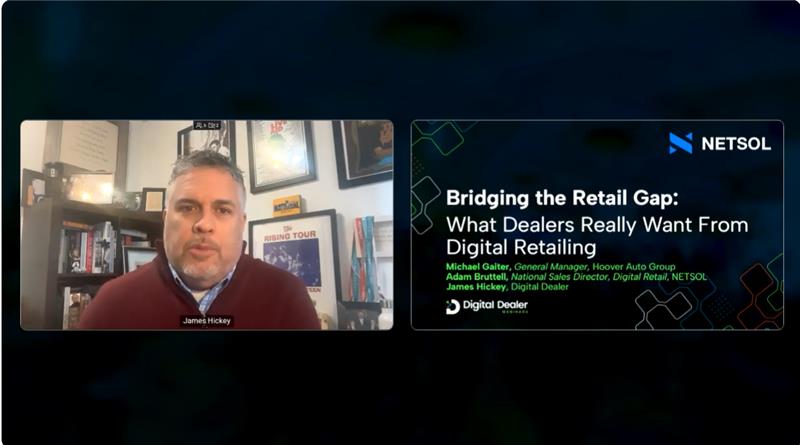
Bridging the retail gap - What dealers really want from digital retailing

Reimagining the dealership experience with AI and omnichannel retail